Want to plan an event?
Let us help you bring your vision to life with flexible spaces, lodging, and support tailored to your group’s needs.
Let us help you bring your vision to life with flexible spaces, lodging, and support tailored to your group’s needs.

Let us help you bring your vision to life with flexible spaces, lodging, and support tailored to your group’s needs.
#Creativity in Preaching Project
Written by Rev. Dr. Heather Henson, Director of Quest
It always amazes me how many unique things others notice that I might miss if I didn’t have them to point them out. In this next post in our series on imaginative preaching, I want to bring up what might be the most obvious and yet most overlooked part of sermon prep. It’s something that could take just a matter of moments but could really shape, frame, and even inform the preacher!
It’s inviting other people into your sermon writing process.
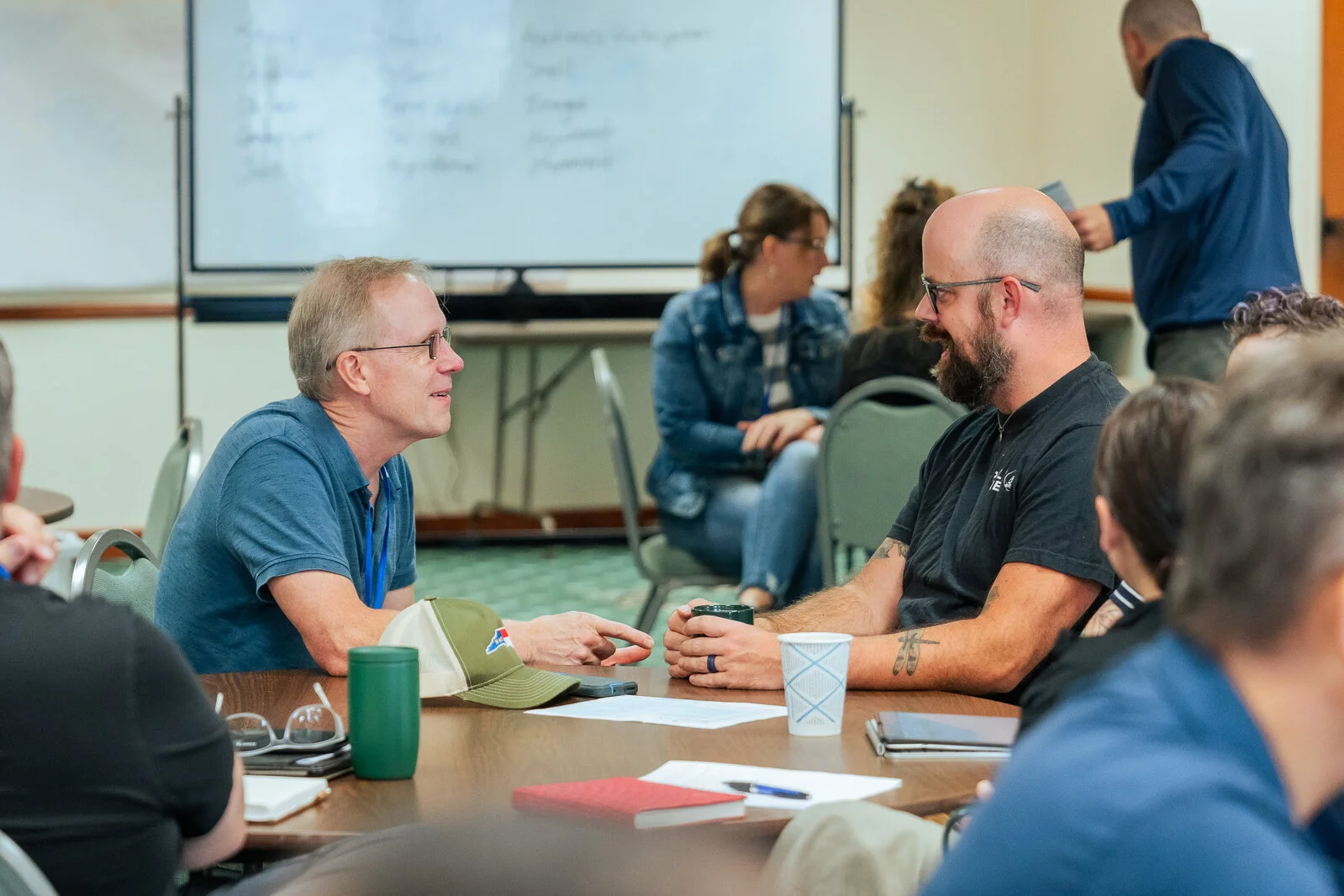
Now, don’t panic on me. I’m not saying you need other people to do research. I’m actually asking you to simply share your Scripture with 2-5 other people and ask them to tell you what they notice and share with you one wonder or curiosity.
Maybe you can remember the Psalm I shared in our opening blog post. I’ll share it here below. I used it as an opening Scripture reading the last time I gave a presentation on this very topic. And that morning, I texted it to my two oldest children. They were ages 17 and 14 at the time. I asked them to tell me what caught their attention and what questions came to mind:
Psalm 33:6-9
“By the word of the Lord the heavens were made, their starry host by the breath of his mouth. He gathers the waters of the sea into jars; he puts the deep into storehouses. Let all the earth fear the Lord; let all the people of the world revere him! For he spoke and it came to be; he commanded, and it stood firm.”
Now, before I tell you what they texted me back (within 5 minutes), I want you to write down what you noticed. Don’t worry, I won’t see it. Just write it down. In these verses, what catches your attention? What stops you? What question pops into your mind? That’s what you noticed.
Now, here’s what my kids noticed:
Here’s what my 17-year-old daughter noticed:
“I noticed the imagery of putting the waters in a jar. Like, something so huge and massive and uncontrollable to us is somehow so easy and manageable to God that he can just scoop it up and put it somewhere safe.”
And here’s what my 14-year-old son noticed:
“First, I noticed how it’s his word/breath that creates things, unlike some fantasy worlds where they use wands or spells. Also I’m curious what the storehouse thing is …”
These are their unedited, unfiltered observations. And in a few sentences, I had a whole new perspective and direction to consider. I had a powerful vision given to me by my oldest daughter. An image of God scooping up water and placing it in a jar. How powerful. How awe-inspiring.
And I had this remarkable comparison from my son. God isn’t like a fantasy book or movie. He doesn’t need something. He can just breathe, and it is. And a fantastic question. He wants to know what a storehouse is.
Would I have seen these things without them? Would I have asked these questions? They give me some idea of what they are seeing, asking, and pondering.

Now, imagine if you did this with any other passage of Scripture. Imagine if you surveyed different people from your congregation. Youth, senior adults, children, middle-aged parents, singles, working adults, stay-at-home parents, doctors, clerks, really anyone.
What different things might they notice that you and I might not?
They aren’t interpreting the Word or doing the exegesis. They are simply noticing and asking.
Their observations also gave me new ways to think about the passage and consider my own exegesis. With this, I can frame some specific questions and explanations. I can consider: How do I explain a storehouse to a 14-year-old? Do I want jars of water in the sanctuary? What if I brought someone up and had them fill a jar of water as a visual? Do I hand out bottles of water that have a verse from this passage written on them?
All these ideas begin to flow.
We often think sermon writing is a solo act. I do all the work, then I dump my research in your lap. But it should be a communal act. It should be something that happens within the community of believers.
It’s not a final paper for your seminary class. It’s a work of the Spirit for the sake of the believers.
October 1, 2026
#Creativity in Preaching Project

September 4, 2026
#Creativity in Preaching Project

August 1, 2026
#Creativity in Preaching Project