Want to plan an event?
Let us help you bring your vision to life with flexible spaces, lodging, and support tailored to your group’s needs.
Let us help you bring your vision to life with flexible spaces, lodging, and support tailored to your group’s needs.
Let us help you bring your vision to life with flexible spaces, lodging, and support tailored to your group’s needs.
#History & Legacy
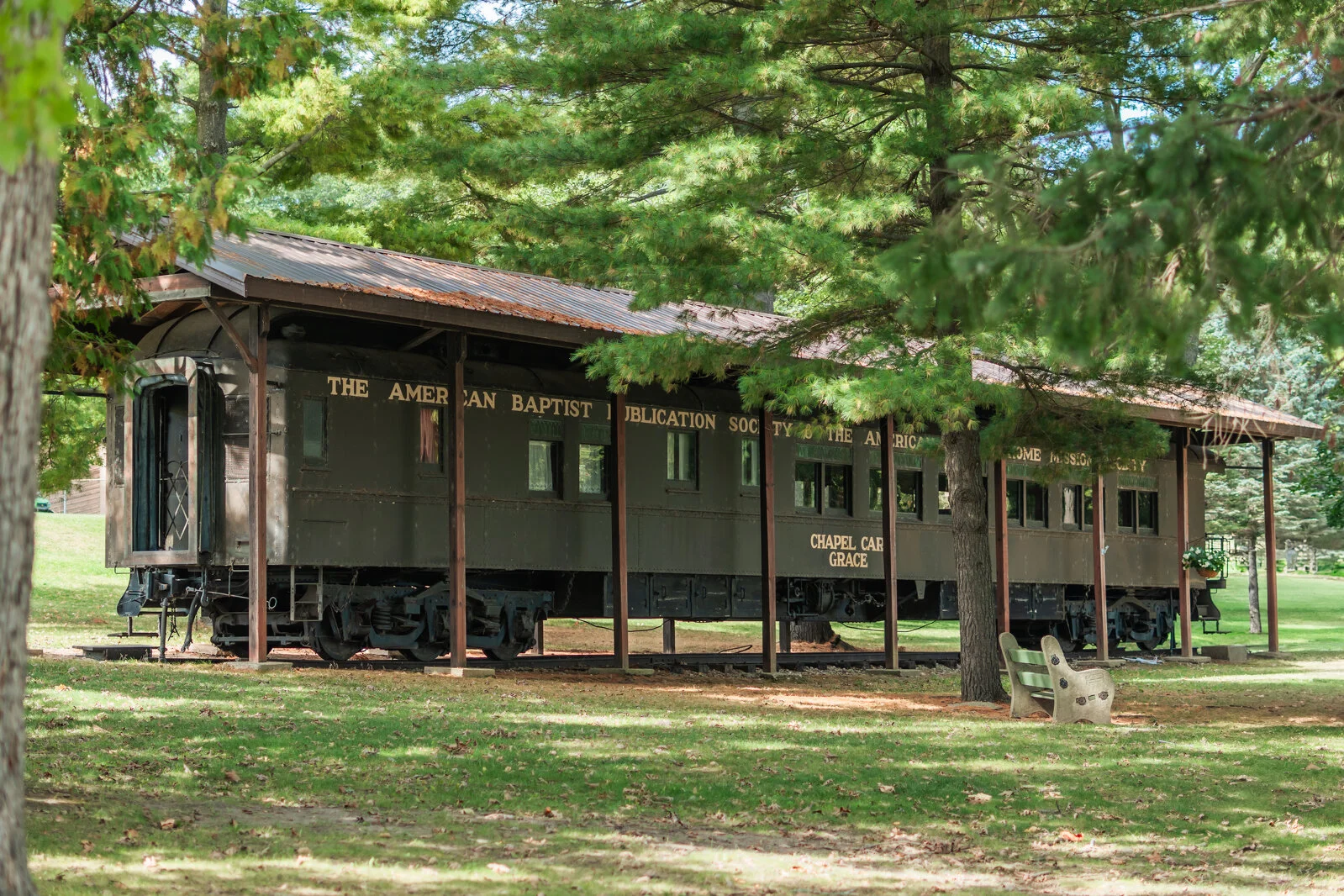
Long before churches filled towns across the country, one traveled from place to place bringing the gospel by train. Chapel Car “Grace,” now resting at Green Lake Conference Center, is a remarkable reminder of a time when ministry moved (literally) across the country, bringing the gospel to places where churches had yet to be built.
In the late 19th and early 20th centuries, as settlers moved west in search of opportunity, communities often formed faster than churches could be established.
So churches adapted.
Denominations across the country, including Baptist, Episcopal, and Roman Catholic, began using specially designed railroad cars as mobile chapels. These cars served as worship spaces, classrooms, and living quarters for missionaries. Chapel Car Grace was one of seven Baptist chapel cars operated by the American Baptist Publication Society between 1891 and 1948—the last of its kind, commissioned in May 1915. Its sister cars were:
Together, these cars served across 25 states, from West Virginia to California and from Texas to Washington, reaching thousands with the gospel and helping establish hundreds of Sunday schools and churches.
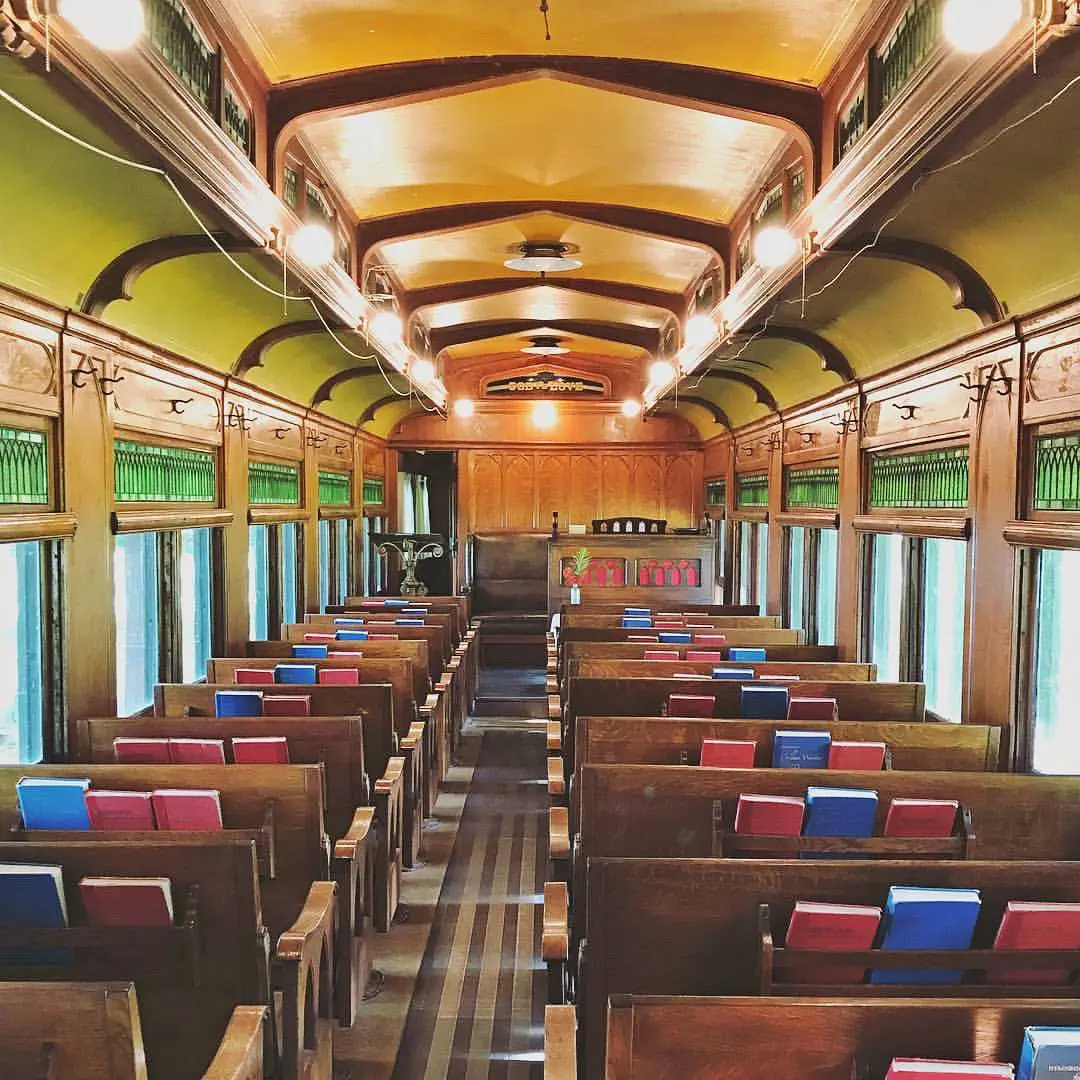
Inside Chapel Car “Grace”
The chapel car ministry was born out of the vision of leaders like Wayland Hoyt and Boston Smith, a Sunday School missionary in Minnesota.
They saw an opportunity: if people couldn’t come to the church, the church could come to them.
Inspired in part by chapel cars used on the Trans-Siberian Railway, early pioneers like William David Walker helped bring the idea to life in the United States. By 1890, the first chapel car had been built, complete with pews, an altar, and even stained glass windows.
Chapel Car “Grace” was built by the Barney & Smith Car Company and featured a unique steel construction with Gothic-style arches inside, giving it the feel of a traditional church despite its mobile form. It was donated by the Conaway family in memory of their daughter, Grace, a name that would come to define its mission.
Before beginning its work, the car was displayed at the Panama-Pacific International Exhibition in San Francisco. From there, it was sent out into the field. Its first assignment took it through Northern California, and over the next three decades, it traveled routes across:
It became a gathering place, a sanctuary, and often the first introduction to church for many communities.
Behind the ministry of Chapel Car “Grace” were the missionaries who lived and served within it. For years at a time, they called the chapel car home while traveling from town to town. Those who served on “Grace” included:
Their work required resilience, adaptability, and deep commitment, bringing the gospel to places where resources were limited and communities were still forming.
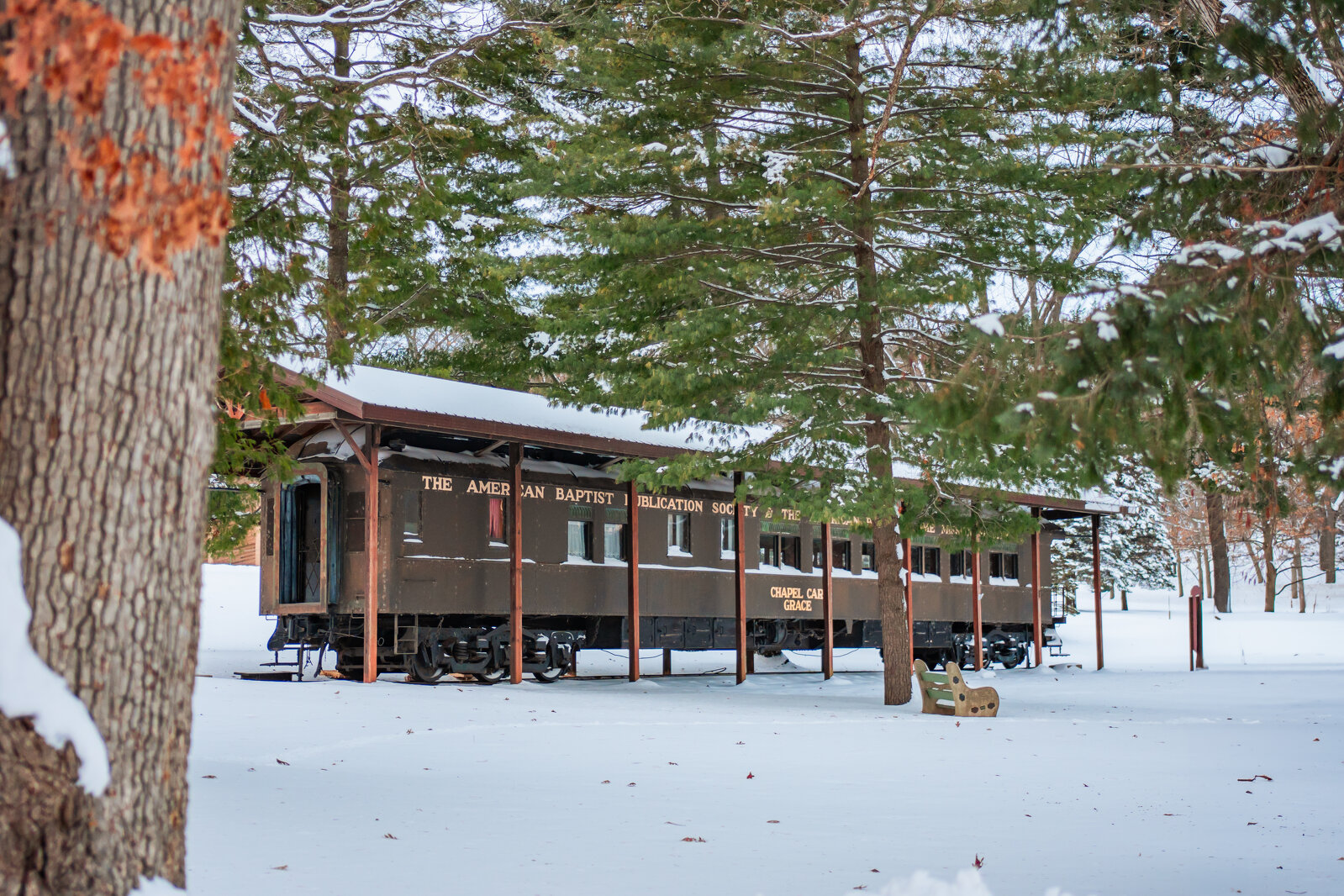
After more than 30 years of service, Chapel Car “Grace” was retired in February 1946. Just a few months later, it was given to the American Baptist Assembly, now Green Lake Conference Center, where it remains today. Its journey may have ended, but its story did not.
Today, Chapel Car Grace stands as more than a historical artifact. It’s a reminder of a simple but powerful truth: the church is not confined to a building. From the railways of the American West to the peaceful grounds of Green Lake, “Grace” tells the story of a faith that was never meant to stay in one place. And for those who step inside, it offers a glimpse into a time when the gospel traveled mile by mile, carrying hope, community, and the message of Christ to the edges of a growing nation.